
AW Executive Forum 2026 Agenda

November 6, 2026
Fairmont Hotel, San Francisco, CA
12:00pm – 4:00pm
PURPOSE
The Marconi Society is a 50+ year-old organization dedicated to building communities of leaders and stakeholders at the forefront of emerging technology by celebrating and supporting innovators, both established and emerging, who shape global connectivity.
The three Marconi Society Institutes (Advanced Wireless, Internet Resilience, and AI) each distinctly serve as platforms for its international network of visionaries and experts to collaborate on identifying, assessing, and recommending actionable solutions in shaping and securing an accessible digital future ona global scale.
AGENDA (by invitation only)
Advanced wireless systems, artificial intelligence, and the resilience of the global Internet are no longer evolving in isolation—they are deeply and irreversibly converging. Global executives and academic pioneers are tasked with identifying the biggest challenges facing technology today, to be solved by innovation for tomorrow. Held under Chatham House Rule, participants will discuss the future of wireless networks, AI’s impact on evolving infrastructure and energy demands, and the need for resilience planning, among other critical topics driving innovation and global connectivity.
EXECUTIVE NETWORKING LUNCHEON
12:00 - 1:00 PM
WELCOME REMARKS & OPENING KEYNOTE
1:00 - 1:30 PM
A formal introduction among participants, brief welcoming remarks informing the day’s purpose anDformat, and establishing the AI Executive Forum as a place for candid, solution-oriented dialogue.

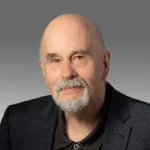
Robert Calderbank is the Charles S. Sydnor Professor at Duke University. He grew up in the northwest of England, starting his technical career at Bell Labs after attending graduate school at Caltech. At the dawn of the Internet, he created technology that enabled more than a billion voiceband modems to communicate at rates approaching the Shannon limit. At the dawn of the wireless Internet, when voice gave way to data, he helped develop multiple antenna technology that met rising demand for high data rates. At the start of the quantum revolution, he helped develop the mathematical foundation for quantum error correction. Dr. Calderbank moved from Lucent to AT&T in 1995 where he later became VP, AT&T Labs Research. At AT&T he helped develop the first research lab in the world focused on communications data at very high scale. He moved to Princeton University in 2003 then to Duke in 2010. Since moving to academia, Dr. Calderbank has been involved with pioneering wireless startups, first Flarion Technologies and most recently Cohere Technologies. At Duke University he created the Rhodes Information Initiative (iiD) and launched the +Programs, where project focused team experiences reach hundreds of undergraduates every year. Dr. Calderbank was elected to the National Academy of Engineering in 2005, to the National Academy of Inventors in 2015, and to the American Academy of Arts and Sciences in 2022. He has received several awards, including the 2013 IEEE Hamming Medal for contributions to information transmission, and the 2015 Claude E. Shannon Award.
SESSION 1
1:30 - 2:30 PM
The New Economics of Non-T errestrial Networks: Building the Next Layer of Global Connectivity
As satellites, direct-to-device services, High Altitude Platform Stations (HAPs), and other non-terrestrial platforms become integral to future wireless networks, the conversation is shifting from technological possibility to commercial reality. This executive discussion will examine the architectural, regulatory, and business challenges of integrating terrestrial and non-terrestrial networks while exploring the economics, operator strategies, and partnerships that will determine whether NTN becomes a sustainable pillar of global connectivity.
HYDRATION BREAK
2:30 - 2:45 PM
SESSION 2
2:45 - 3:45 PM
Intelligent Wireless Networks: AI, Integrated Sensing, and the Search for New Business Value
Wireless infrastructure is evolving beyond communications to become an intelligent platform capable of sensing, inference, automation, and new digital services. This executive discussion will explore how AI-enabled networks and Integrated Sensing and Communications (ISAC) are reshaping wireless capabilities while examining the applications, business models, and revenue opportunities required to justify next-generation network investment.
CLOSING REFLECTIONS
3:45 - 4:00 PM
The Forum will close with notable insights and guidance on next steps. Participants will leave encouraged to continue conversations among peers with additional opportunities to network.

Amy VanDeVelde is the Broadband Specialist and Federal Program Officer for the NTIA. She led the Oasis Connections program from 2012 to 2022. She is an expert at understanding how to build the confidence and the skills digital newcomers and older adults need to use the internet safely. The Connections program has offered thousands of classes under her leadership. Amy is keenly interested in technology that supports and enhances interpersonal relationships and community health by decreasing social isolation. She obtained a certificate from Harvard University in Cybersecurity Risk Management in 2020 and her team was awarded a 2022 HP Aspen Institute Digital Equity Accelerator grant. Amy has been quoted in Family Circle, St. Louis Magazine, and USA Today.

Sheri Osborn is a 3rd year Ph.D. student at UTSA in the Information Systems and Cybersecurity program. Her concentration is Artificial Intelligence, and she will graduate in August of 2023. Her research interests are AI-based platforms that help organizations build strategic advantages and create value by fusing data sources across the organization to reveal opportunities for innovation and market expansion.
Before starting the Ph.D. program at UTSA, she was an entrepreneur and interim executive. As an entrepreneur, she has been granted a patent for a system to assess and improve a user’s life skills and develop self-efficacy. As an interim executive, she has led teams as the head of marketing, business development, and product management. Before being an interim executive, she was a platform director at BroadVision, Adobe Systems, MicroFocus, Symantec, and other technology companies.
She lives in San Antonio with her husband Kevin who is a pastor and chaplain at Methodist Hospital. In her spare time, she loves to travel the world. She gardens and is constantly trying to master cooking techniques from around the world.
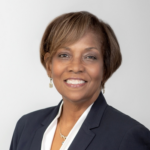
Debora Plunkett is a cybersecurity leader with over 30 years of experience. A former Director of Information Assurance at the National Security Agency, she is Principal of Plunkett Associates LLC, a consulting business. She is also a Senior Fellow at Harvard’s Belfer Center and a Professor of Cybersecurity at the University of Maryland.
Ms. Plunkett serves on the corporate boards of CACI International, Nationwide Insurance, Mercury Systems, and BlueVoyant. She is a founding member and chairman of the board of Defending Digital Campaigns, a non-profit entity focused on providing free or low-cost cybersecurity services to federal election campaigns.

Karen is a Scottish Computer Scientist who does research at the boundary where humans and security meet. She is particularly interested in understanding how humans feel about cybersecurity, and in finding out the consequences of organizations wielding negative emotions to encourage secure behaviors. She also tries to improve accessibility to ensure that everyone is able to be safe and secure online, not only in a privileged sector of society.
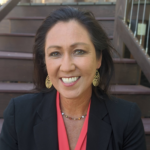
Yvette Renteria is the Chief Program Officer for Common Sense Media. She leads the education, research, family, and community engagement teams that support our kids to thrive in a digital world.
Yvette brings 20 years of experience working in public schools and nonprofit organizations focused on supporting young people to reach their full potential, with an emphasis on low-income communities. Throughout her career, she has worked directly with students and families to ensure kids receive a quality education. Yvette has built programs for young adults to access skills-based training to open opportunities for gainful employment. She’s also developed programs for early child care providers to build sustainable businesses while supporting the families most in need of those services. The focus of her career has always been about access, opportunity, and growth for people.
Yvette holds a Masters of Education from Loyola Marymount University and Bachelors of Development Studies from UC Berkeley.

Dr. Roy Want received his doctorate from Cambridge University, England in 1988 and is currently a Senior Research Scientist at Google. Dr. Want’s previous positions include Sr. Principal Engineer at Intel Corporation and Principal Scientist at Xerox PARC.
He holds the grades of ACM and IEEE Fellow. His research interests include mobile and ubiquitous computing, distributed systems, context-aware applications, and electronic identification. Dr. Want has more than 30 years of experience working in the field of mobile computing. He served as the Editor-in-chief for IEEE Pervasive Computing from 2006-2009 and Chair of the ACM SIGMOBILE executive committee from 2009-2012. More recently, he received the ACM SIGMOBILE Outstanding Contributions Award in 2019. For more information about Dr. Want’s academic and industrial achievements see https://en.wikipedia.org/wiki/Roy_Want.