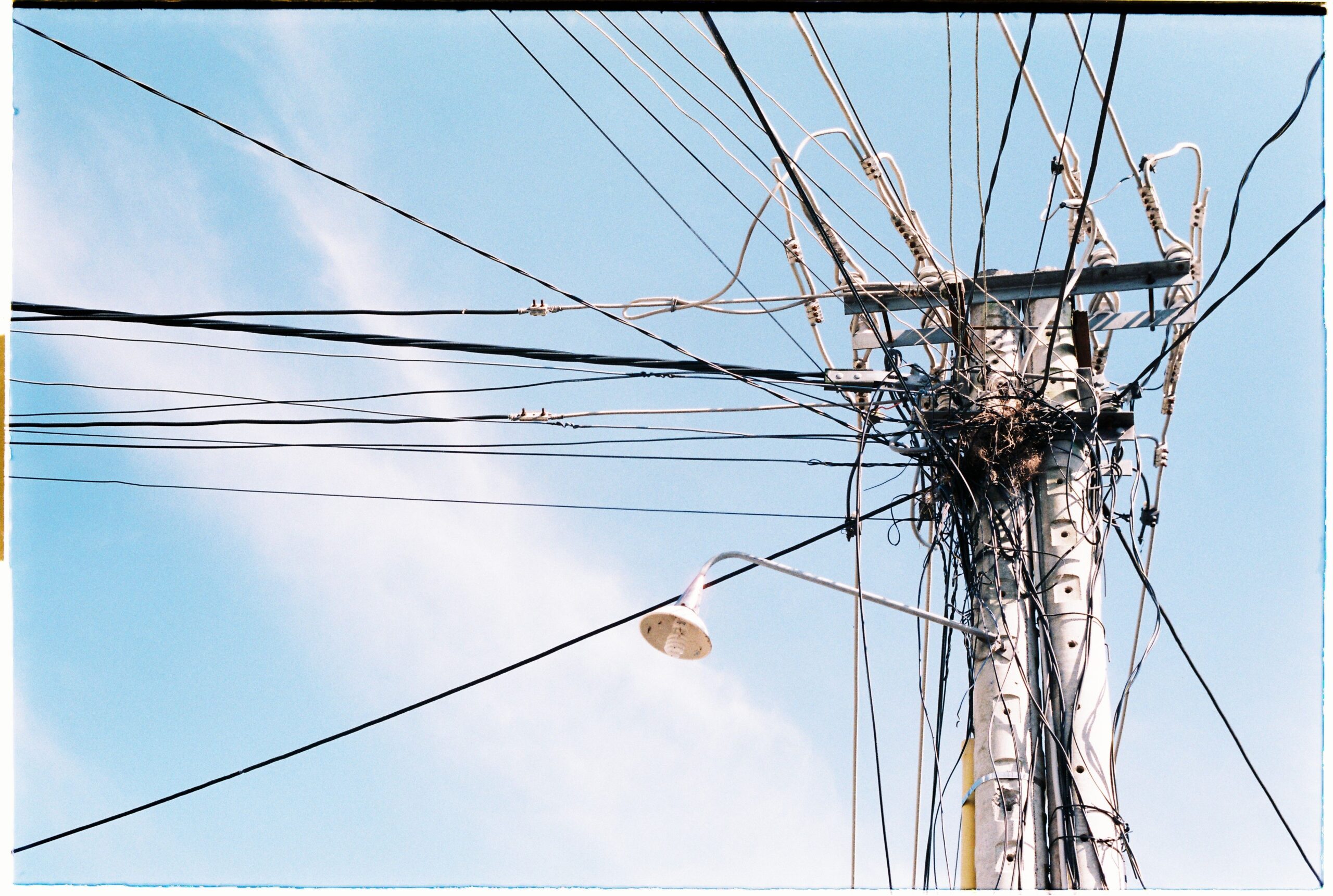
For decades, the Internet’s resilience has been meticulously built through open standards, interoperability, distributed architectures, infrastructure diversity, and voluntary cooperation among technical, operational, and policy communities. These core principles have empowered the Internet to withstand failures, mitigate attacks, and accommodate continuous global growth.
However, as society deepens its reliance on AI, Digital Public Infrastructure (DPI), cloud computing, and global digital trade, resilience can no longer be taken for granted. In July, the Marconi Society Internet Resilience (IR) Institute hosted a session, Operationalizing Digital Resilience, at the WSIS Forum 2026 convening in Geneva for global stakeholders to discuss practical approaches to ensuring the resilience of the Internet and its supporting infrastructure. The consensus was clear: Internet resilience is the absolute foundation for creating justifiable trust in our digital society. Trust must be earned through demonstrable reliability, continuity, and resilience—it cannot merely be assumed.
Uncovering Hidden Dependencies
Delivering this justifiable trust relies on a complex, often invisible ecosystem of cooperating networks, cloud platforms, power systems, and supply chains. To help untangle this web, the IR Institute proudly presented two flagship Phase 1 outputs during the session: the Life of a Packet Mapping Framework and the Business Resilience Guide.
The Life of a Packet framework demonstrates that even the simplest digital interactions depend on numerous technical and institutional components working in harmony. Understanding these dependencies—ranging from routing and DNS to underlying power and finance infrastructures—is vital for identifying systemic risks and preventing cascading failures. Resilience extends far beyond the visible application layer.
The Illusion of Redundancy
A recurring finding addressed in the Business Resilience Guide is the dangerous misconception surrounding redundancy. Many organizations believe they are protected by redundant systems, only to discover during a crisis that their “independent” connections share the same physical trench, upstream provider, or power source. Redundancy is not true resilience if the underlying dependencies are shared.
To combat this, the Guide offers a practical, four-step model adapted from hyperscaler-grade practices, tailored for organizations without dedicated continuity teams:
- Assess availability needs.
- Model risk through scenario mapping.
- Plan by building a contingency strategy.
- Govern through named ownership and regular testing.
Resilience only becomes real when it has an owner, a test, and a continuous learning loop.
Adapting to Emerging Realities and Looking Ahead
As we look to the future, emerging developments such as AI-enabled cyberattacks, cloud concentration, IoT deployments, and the transition to post-quantum cryptography are introducing new attack surfaces. These disruptions reinforce the urgent need to evolve our resilience practices while preserving the Internet’s open and collaborative architecture.
Furthermore, effective resilience models must reflect diverse human realities. The failure scenarios experienced by mobile-first users, youth, informal economies, and underserved communities often differ fundamentally from enterprise environments. A resilience framework is only as complete as the failure scenarios against which it has been tested. As we move into Phase 2 of the IR Institute’s activities, we invite governments, infrastructure operators, businesses, academia, civil society, and youth to contribute their practical experiences and use cases.
The Internet has demonstrated remarkable resilience because it was designed as an open, collaborative system. As digital transformation accelerates, our challenge is not to reinvent these foundational principles, but to extend them to new technologies, hidden dependencies, and all users. Together, we can engineer justifiable trust and ensure a resilient digital future for everyone.
This is the work the IR Institute was created to advance. At the 2026 Marconi Awards Gala & Institute Forums this November 4-6 in San Francisco, global leaders from industry, academia, government, and civil society will convene to translate these complexities into concrete frameworks, partnerships, and standards while recognizing leaders championing innovative solutions.