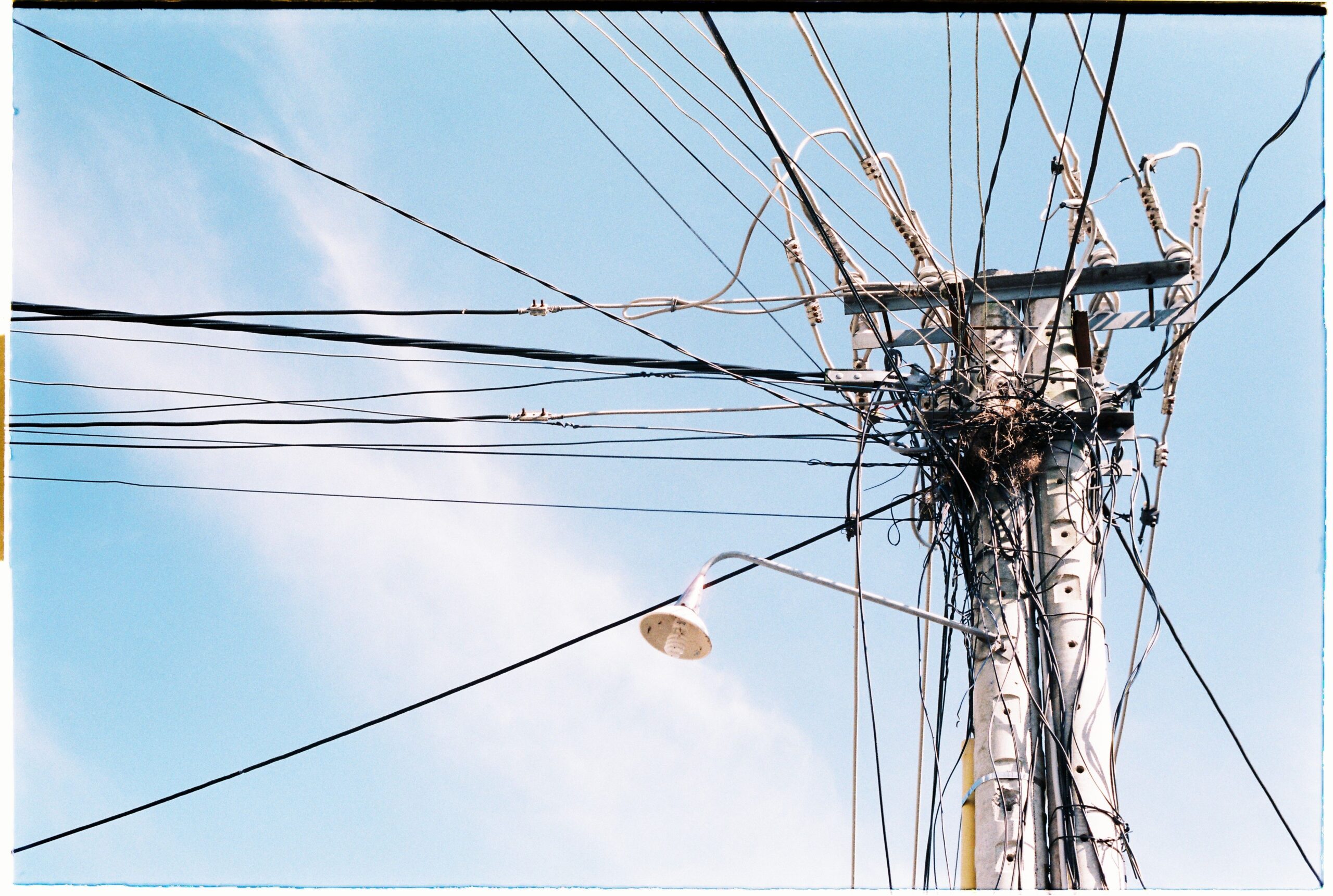
By the time you finish reading this article, billions of data transactions will have crossed the globe. A patient’s medical record will have been retrieved by an emergency room physician. A small business owner in Southeast Asia will have processed a payment. A student in rural Appalachia will have attended a virtual class. All of it riding on infrastructure many of us never see, never think about, and almost never question.
That invisible infrastructure, the Internet, is one, if not the most, single most consequential technological achievement in human history.
Yet if you question most people on what “Internet resilience” means to them, they will likely describe a user experience, such as accessing social media platforms or sending emails, or perhaps something physical, like hardware or cables. That understanding is wholly incomplete.
Internet resilience is the capability of a complex digital ecosystem—its infrastructure, institutions, governance systems, and human operators—to anticipate, absorb, adapt to, and recover from disruption. It encompasses not just the computing, networking and data center infrastructure that carries our information, but the power grids that keep them running, the financial systems that fund their operation, the regulatory frameworks that govern their use, and the human expertise required to maintain them.
The Marconi Society Internet Resilience Institute’s research has made one thing unmistakably clear: Internet resilience has progressed beyond the recovery from failures. Resilience depends on system design and operation that is able to withstand and adapt, minimizing and avoiding disruptions. Think of it less like a fire extinguisher and more like a fire-resistant building. One responds to catastrophe after it happens. The other is engineered so that catastrophe has far less chance of happening at all, with far less destructive power if it does.
The early Internet was designed and deployed with survivability in mind, but the Internet today bears little resemblance to that original architecture. Today’s digital ecosystem is a breathtakingly complex web of interdependencies, and it is precisely that complexity that creates risk.
The evidence is already appearing in real-world events. In early 2025, a power disruption across Portugal, Spain, and parts of France didn’t just darken homes and streets, it cascaded across interconnected digital, financial, and communications infrastructure in ways that caught many completely off guard. Businesses discovered they had contingency plans for their systems going down but had never asked what would happen if their cloud provider, their payment processor, or their logistics partner lost connectivity simultaneously.
That is the nature of modern systemic risk. It hides in the gaps between organizations, between sectors, and between policy domains. It thrives on assumptions that have never been tested, and business continuity plans rarely rehearsed.
Why an International Internet Resilience Awareness Week?
The Marconi Society has always believed that transformative technology requires transformative stewardship. Founded in honor of Guglielmo Marconi, whose pioneering work in wireless communication helped lay the foundation for the connected world we inhabit today, the Marconi Society has long championed the idea that the benefits of communication technology must be accessible, sustainable, and resilient for all of humanity.
The Internet Resilience (IR) Institute was established to give that mission a concrete, urgent focus. Born from a 2024 inaugural workshop that dared to ask, “If the Internet suffered a global failure, what would be needed for a reboot?”, the IR Institute has grown rapidly into a trusted convener of global expertise, developing practical resources including a Business Resilience Guide and a Life of a Packet Mapping Exercise that help organizations, individuals, and policymakers at every level understand and identify digital dependencies.
International Internet Resilience Awareness Week 2026 is the natural next step to provide a global platform for elevating the conversation beyond specialist communities and into the public consciousness, where it belongs.
The Internet is not invincible. It is a human achievement reflecting both our greatest capabilities and most persistent blind spots. It can be strengthened or weakened by the choices we make, the investments we prioritize, and the collaborations we choose to pursue or neglect.
The IR Institute envisions a global Internet that remains robust, recoverable, and adaptive in the face of threats, disruptions, and rapid change in an increasingly complex world.
International Internet Resilience Awareness Week 2026 is our invitation to you to be part of building that future.